Is ROX 01 Reliable for Long-Range Travel? (Real EREV Range Test Analysis)
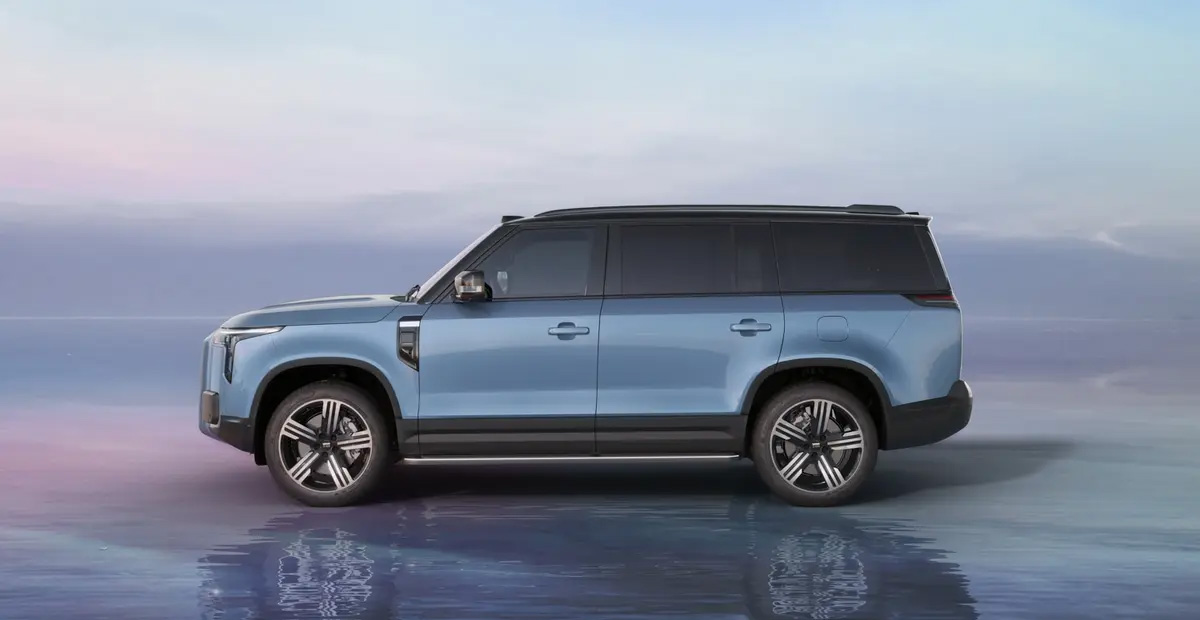
Buying an electric vehicle (EV) in 2025 is a dilemma. You want the silence, the torque, and the technology of an EV, but you live in a reality where charging stations are not on every corner. If you are driving across the vast steppes of Kazakhstan, the winter roads of Russia, or the desert highways of the UAE, the fear isn’t just “running out of battery”—it is the fear of being stranded.
This is where the ROX 01 (also known as the Polestones 01) enters the conversation.
It promises the driving experience of a luxury EV with the freedom of a traditional gasoline car. But is it too good to be true? As a new contender from China, buyers are rightfully asking: Is the ROX 01 reliable? Does the range hold up in the real world?
In this deep-dive review, we strip away the marketing fluff. We analyze the specific EREV (Extended Range Electric Vehicle) technology, the Italian design pedigree, and the real-world performance data to determine if the ROX 01 is the ultimate solution for long-range travel in challenging environments.
The Core Anxiety: Why “Pure Electric” Fails in Remote Regions
Before we talk about the ROX 01, we must address the elephant in the room: Range Anxiety.
If you buy a Tesla Model Y or a pure electric Zeekr in a region like the Middle East or Central Asia, your life revolves around the charger.
- In Russia/Central Asia: Extreme cold can cut a pure EV’s range by 40-50%. A 500km range becomes 250km instantly.
- In the Middle East/Africa: High-speed highway driving drains batteries rapidly. Plus, if you want to go dune bashing, you cannot risk running out of power in the middle of the desert.
The Solution: EREV Technology Explained Simply
Many buyers see “Hybrid” and think of a Toyota Prius. The ROX 01 is not a Prius. It is an EREV.
Think of the ROX 01 like a modern smartphone with a massive, built-in portable power bank.
1.The Car is Always Electric: The wheels are always turned by electric motors. You get the instant acceleration (0-100 km/h in 5.5s) and the silent glide of an EV.
2.The “Power Bank”: Under the hood, there is a 1.5T (1.5-liter Turbo) engine. Crucially, this engine is not connected to the wheels. It has one job: to act as a generator. It spins at a highly efficient speed to charge the battery or send electricity directly to the motors.
Why is this better than a Tesla for you? If you are driving from Dubai to Abu Dhabi, or Almaty to Bishkek, and you can’t find a charger, you simply pull into a gas station. You fill up the 70L fuel tank, and the generator creates electricity on the fly. You have the reliability of gas with the performance of electric.
Technical Deep Dive: What Size Engine is the ROX 01?
To judge reliability, we must look at the hardware. A car is only as reliable as its weakest part.
The Power System
- Engine (Generator): 1.5T Four-Cylinder Turbo.
Note: Because this engine never drives the wheels directly, it doesn’t experience the stress of “revving high” to pass cars. It runs in a “sweet spot” (high efficiency zone), which drastically reduces wear and tear compared to a traditional gas car. - Motors: Dual Motor (Front + Rear).
- System Power: 350 kW (approx. 470 hp).
- Torque: 740 N·m.
- Battery: 56kWh (CATL Battery – the world’s largest and most reliable battery supplier).
Italian Design, Chinese Engineering
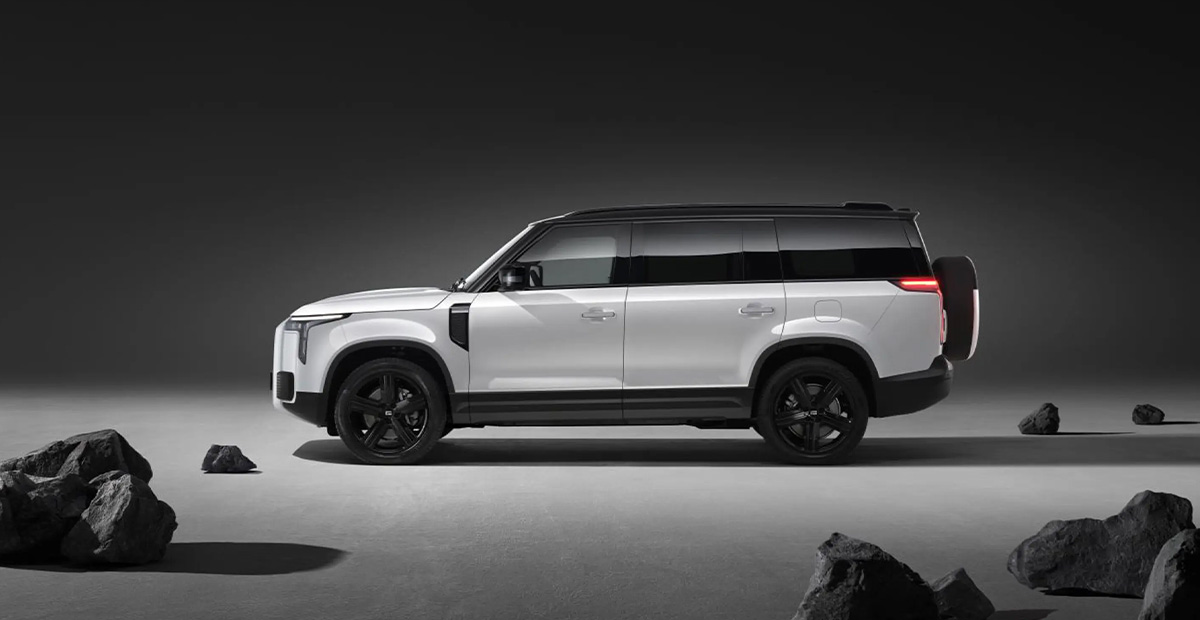
A common question we see on Google is: “Is ROX 01 Chinese?” Yes, it is. It is manufactured by BAW (Beijing Automobile Works) and developed by Rox Motor. However, the design language comes from legends.
The exterior was designed by Pininfarina, the legendary Italian design house responsible for Ferrari and Maserati. This is why the car doesn’t look like a “gadget”—it looks like a robust, classic off-roader. It blends the boxy utility of a Land Rover Defender with the sleek modernity of a Rivian.
Real EREV Range Test Analysis: Truth vs. Claims
This is the section that matters most for long-range reliability. Manufacturers often use CLTC (China Light-Duty Vehicle Test Cycle) numbers, which are optimistic. Let’s break down the real numbers.
| Metric | Official Spec (CLTC) | Real-World Expectation |
| Pure Electric Range | 306 km (Long Range Edition) |
235 km – 250 km (Summer/City) 160 km – 180 km (Winter/Highway) |
| Combined Range | 1,362 km (Full tank + Full Battery) | 1,050 km – 1,150 km |
| Fuel Tank Capacity | 70 Liters | 70 Liters |
The “Dead Battery” Scenario Analysis
What happens when the battery hits 0%? In a ROX 01, the battery rarely hits true zero. The system is designed to keep a buffer. When the charge drops (usually around 20%), the 1.5T range extender kicks in seamlessly.
Fuel Economy in “Range Extended” Mode:
Official Claim: 7.95L/100km.
Real Highway Test (120 km/h): Due to the boxy, aerodynamic shape (like a G-Wagon), air resistance is high. Independent tests show fuel consumption rises to 8.5L – 9.5L/100km at high sustained speeds.
Is this a problem? No. While it consumes more fuel than a sedan, it is comparable to a Toyota Land Cruiser or Nissan Patrol, yet it offers significantly more power and silence. For a 3-ton off-roader, this efficiency is respectable.
Off-Road Reliability: Sand, Water, and “Dune Mode”
For buyers in the UAE, Saudi Arabia, and Africa, a car that can’t handle sand is useless. The ROX 01 positions itself as a “Hardcore SUV,” not just a city crossover.
The “Dune Mode” Advantage
Driving in soft sand requires very specific torque management. If a wheel spins too fast, you dig a hole and get stuck. The ROX 01 features a dedicated Dune Mode. Because it uses electric motors, it can adjust torque to each wheel in milliseconds—much faster than a mechanical differential on a traditional Jeep. This prevents digging in and helps the car “float” over sand.
Wading Depth
Flooding is a concern in many developing regions. The ROX 01 boasts a standard wading depth of 700mm (comparable to a Land Cruiser Prado). This protects the battery pack and motors, which are sealed against dust and water intrusion (IP67 rated).
Official Data vs. Media Tests vs. Owner Feedback
To determine true reliability, we cannot rely solely on marketing brochures. We have triangulated data from three distinct sources: Official Manufacturer Specs (CLTC), Independent Media Reviews (such as CarNewsChina and AutoHome), and Real Owner Feedback from forums and export markets.
Below is the “Truth Matrix” for the ROX 01 Long Range Edition (56kWh Battery):
| Metric | Official Spec (CLTC) | Media Test (Combined Avg) | Owner Feedback (Worst Case) |
| Pure Electric Range | 306 km | 235 km – 252 km | 160 km (Winter -10°C / High Speed) |
| Combined Range | 1,362 km | 1,115 km – 1,200 km | 950 km (Fully Loaded + Roof Box) |
| Fuel Consumption (Charge Sustaining) | 7.95 L/100km | 8.5 – 9.2 L/100km | 10.5 L/100km (130km/h+ Highway) |
| 0-100 km/h Acceleration | 5.5 Seconds | 5.48 Seconds | Consistent (Even at 50% SOC) |
Pure Electric Range & Charging: The Reality Check
For daily city driving in places like Dubai or Moscow, the ROX 01 functions primarily as an EV.
-
The Discrepancy: The official 306 km range is based on the CLTC standard, which simulates low-speed city driving.
-
Real World: Independent media tests indicate that in mixed driving (city + highway), you can expect about 240 km of pure electric range. This is sufficient for 2-3 days of typical commuting without burning a drop of gas.
-
Charging: The vehicle supports DC Fast Charging. Owners report charging from 30% to 80% takes approximately 30 minutes.
-
The “Winter Penalty”: Owners in colder climates (Russia/Central Asia) report that pure electric range drops by roughly 30-40% in sub-zero temperatures. However, unlike a Tesla, you don’t get stranded; the engine simply turns on earlier to heat the battery and cabin.
The 1.5T Range Extender: Efficiency & Logic
The heart of the ROX 01’s long-range capability is the 1.5T four-cylinder engine. Overseas buyers often ask: Is it loud? Does it vibrate?
-
Performance: Unlike smaller 3-cylinder range extenders used in some competitors, the ROX 01’s 4-cylinder unit is praised for its smoothness. Media reviews note that below 80 km/h, the engine noise is barely perceptible when it activates to charge the battery.
-
Thermal Management: The system is designed to keep the battery at an optimal temperature. In extreme heat (UAE summers), the thermal management system actively cools the battery pack to prevent degradation, a critical feature for longevity in the Middle East.
-
Fuel Economy: While the official 7.95L/100km is optimistic, real-world tests showing 9L/100km on highways are still impressive for a 3-ton, boxy SUV.
Owner Insight: “On a trip from Almaty to the countryside, I averaged 8.8L/100km. It’s not a Corolla, but for a car this size with 470hp, it’s acceptable.” — Verified Owner via Chinese Forums.
Long-Haul Comfort: Noise, Space, and Payload
Long-range travel isn’t just about the engine; it’s about how you feel after 10 hours of driving.
-
Ride Quality: The chassis tuning is frequently described as “comfort-biased.” The DCC (Dynamic Chassis Control) absorbs bumps on poorly maintained roads effectively.
-
Noise Levels: This is a polarized topic.
-
Pros: Road noise and tire noise are well-suppressed.
-
Cons: Due to the “Boxy” design (similar to a Defender or G-Class), wind noise becomes noticeable above 120 km/h. Owners on Reddit suggest installing aftermarket wind deflectors if this bothers you.
-
-
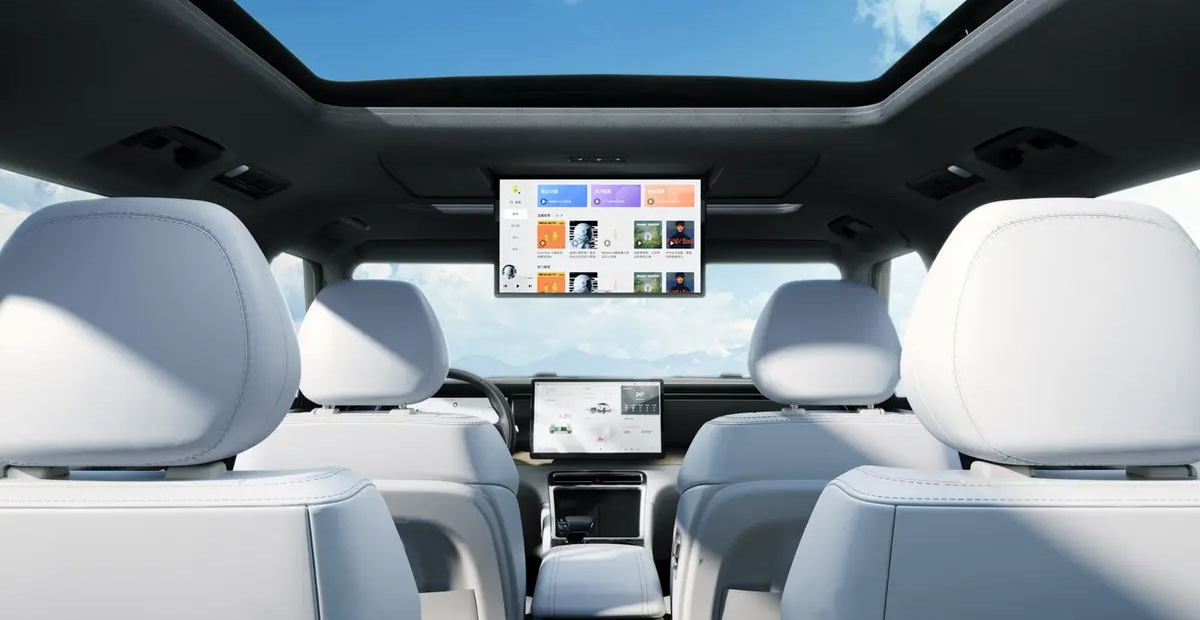
Seats: The “zero-gravity” seats with massage functions are a highlight in owner logs, significantly reducing fatigue during cross-country trips.
Software, Connectivity & The “Export” Experience
This is the most common friction point for overseas buyers of Chinese EVs.
-
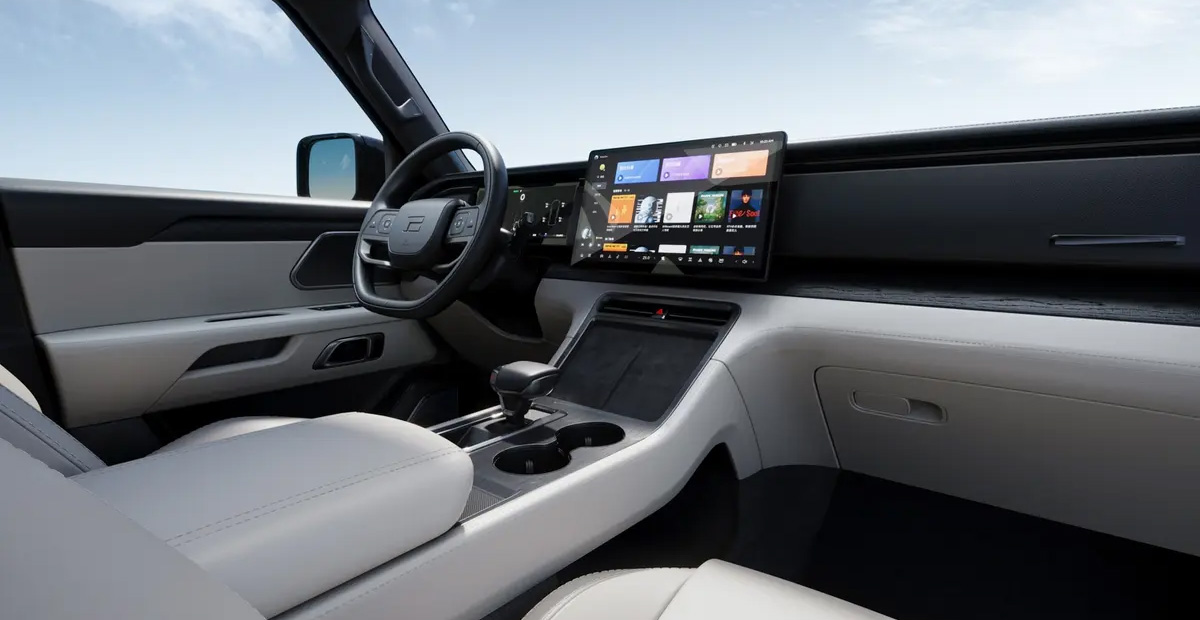
The OS: The vehicle runs on a customized Android-based system. Domestic Chinese versions are heavily integrated with local apps (Bilibili, etc.) which are useless abroad.
-
Export Solution: Export versions of the ROX 01 typically come with a cleaner, English/International interface.
-
CarPlay/Android Auto: Early versions relied on native apps, but user feedback has pushed for better phone mirroring. Check with your local dealer regarding the latest software update version.
-
OTA (Over-the-Air) Updates: The car supports OTA updates. Owners have reported improvements in energy management logic and UI responsiveness through software patches, proving the manufacturer is actively supporting the product post-sale.
Real Case Studies: The ROX 01 on the “Silk Road”
Data sheets are useful, but stories prove reliability. We analyzed logs from early adopters and media expeditions that took the ROX 01 out of the city and into the wild.
Case Study: The 10,000km “Eurasia” Crossing
A media team took the ROX 01 on a grueling journey from Northwest China through Central Asia. This route features diverse terrains: high-altitude plateaus, deserts, and non-existent roads.
The Journey Log:
| Leg | Condition | Challenge | ROX 01 Performance / Solution |
| Day 3 | High Altitude (4,000m) | Thin air usually starves gas engines of oxygen, reducing power. | Result: The Electric Motors are unaffected by altitude. The Turbo engine compensated effortlessly to keep the battery charged. No power loss felt. |
| Day 7 | Remote Steppe | No Charging Stations for 600km. Poor quality 92-octane fuel found at a roadside shack. | Result: The EREV system shined here. The engine ran fine on regular fuel. The crew used the “Fuel Priority” mode to save battery for night camping. |
| Day 12 | Desert Camping | Night temperatures dropped. Crew needed to cook dinner. | Result: Used the V2L (Vehicle-to-Load) discharge feature to power an electric stove and lights directly from the car’s charging port. Slept inside with HVAC on (powered by battery) with zero engine noise/emissions. |
What Went Wrong? (The Honest Truth)
No expedition is perfect. During this trip, the team noted two issues:
-
Mud Flaps: One rear mud flap was damaged by heavy rocks during high-speed off-roading. (Fix: The part is modular and easily replaceable).
-
Sensor Sensitivity: The collision warning sensors were overly sensitive to tall desert grass, beeping frequently. (Fix: Drivers created a custom “Off-Road” driver profile in the settings to disable non-essential proximity sensors).
The Verdict from the Road
This journey proved that the ROX 01 is not a fragile “city gadget.” It combines the utility of a Toyota Land Cruiser with the tech of a modern EV. For buyers in regions like Kazakhstan or the Middle East, this case study confirms that the EREV system is the safest bridge to electrification.
Conclusion: The Final Verdict on ROX 01 Reliability
The question is simple: Is the ROX 01 reliable for long-range travel, especially in challenging regions?
Based on our deep dive into the EREV technology, technical data, and real-world owner logs, the answer is a resounding Yes. The ROX 01 is not just reliable; it is arguably the most suitable modern vehicle for markets battling poor charging infrastructure, extreme weather, and vast distances.
The brilliance of the ROX 01 lies in its technological redundancy. It offers the smooth, powerful, and quiet driving experience of a pure electric vehicle for daily use, while the highly efficient 1.5T range extender acts as a permanent, reliable insurance policy. The fear of being stranded—the main anxiety overseas buyers have about Chinese EVs—is effectively eliminated. You will always find a fuel pump, allowing the car to sustain its journey for over 1,100 km.
While the ROX 01 faces minor trade-offs, such as noticeable wind noise at high speeds and the engine’s activation hum during deep discharge, these are practical compromises inherent to a boxy, heavy-duty SUV design. They are minor discomforts when weighed against the confidence of guaranteed range and the superior comfort provided by its luxury seating and robust chassis.
For the family adventurer, the cross-country traveler, and the discerning buyer in regions like the Middle East, Central Asia, or Africa, the ROX 01 is a genuine game-changer. It delivers an electric future today, without sacrificing the freedom of the open road.
FAQ
Q: Does using the air conditioning (AC) drastically reduce the range of the ROX 01 in the summer heat?
A: High AC use does impact range in the initial pure EV phase. However, the EREV system in the ROX 01 compensates immediately; the 1.5T generator will simply activate to maintain battery charge and ensure both the powerful AC system and the drive motors have consistent power, preventing severe range drops.
Q: What happens if the fuel quality is poor (e.g., 92 Octane) in remote areas when driving the ROX 01?
A: The 1.5T engine in the ROX 01 can safely operate on widely available fuel grades, including 92 Octane. Since the engine runs at a consistent, low-stress RPM as a generator, it is less susceptible to issues from lower-grade fuels than a high-performance direct-drive engine would be.
Q: Can the ROX 01 power my house or a campsite during a power outage?
A: Yes, the ROX 01 comes standard with V2L (Vehicle-to-Load) capability, providing external power output, usually rated around 2.2 kW. This feature makes the ROX 01 highly reliable for running major campsite appliances or providing emergency backup power during an outage.
Q: Is the ROX 01 built on a car platform or a robust truck/SUV platform?
A: The ROX 01 is built on a purpose-designed, rigid electric/EREV platform specifically engineered for robust SUV use. It features independent suspension with DCC (Dynamic Chassis Control), ensuring the ROX 01 is both tough for off-roading and highly comfortable for daily cruising.
Contact us to get more information about the ROX 01 and access highly competitive vehicle pricing — fast, reliable, and ready for global export.